
The difficulties facing David Jones and Cue have brought retail costs into sharp focus. Legal and compliance spending deserves scrutiny too, particularly when businesses are paying repeatedly to resolve the same issues.
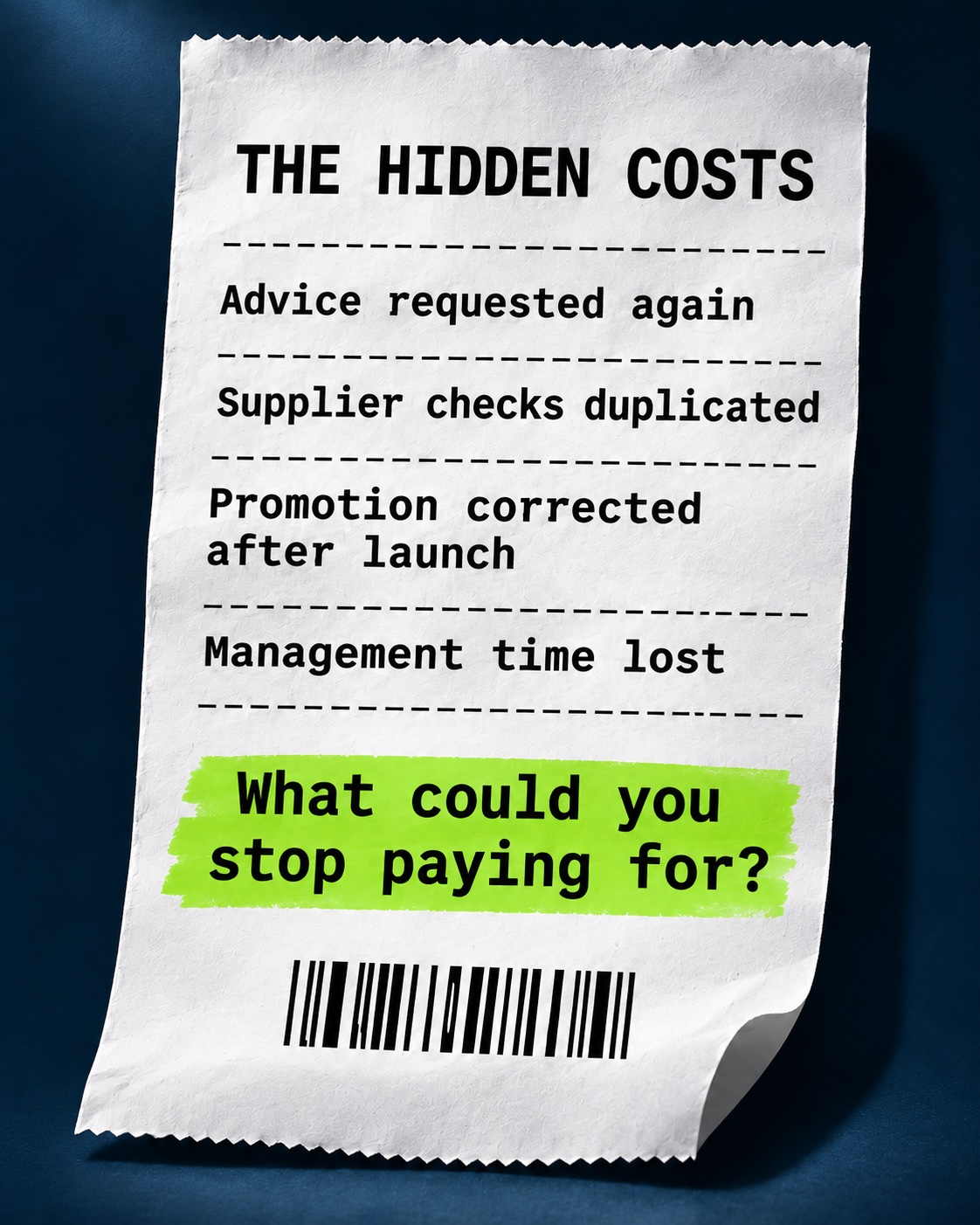
Refund questions escalated again. Promotions corrected at the last minute. Supplier checks duplicated across teams. These everyday costs are less visible than an invoice, but they consume staff time and can generate further advice bills.
1. Stop paying to answer the same question
When the same refund issue repeatedly reaches a manager or external adviser, the business may be paying several times for advice it already holds.
A practical way to reduce that cost is to turn recurring advice into clear procedures and decision guides. Staff need to understand what they can resolve, what information to collect and when specialist advice is necessary.
For example, a refund guide supported by short, targeted training can help staff handle familiar situations consistently, while directing unusual or disputed matters to the right person.
Where a lawyer is needed, an organised brief containing the relevant facts, documents and precise questions can reduce time spent reconstructing the background. This can reduce the time spent on repeated explanations and follow-up questions, and the fees associated with that work.
2. Avoid paying twice for the same checks
Check whether suitable evidence already exists before paying for another review or test.
Coles reported in 2026 that it simplified how certifications are assessed and reviewed to reduce duplicated work, with clearer responsibilities and criteria for when a fresh review is needed.
KMD Brands, whose brands include Kathmandu and Rip Curl, reported in 2025 that sharing verified supply-chain data through the Social and Labor Convergence Program helps reduce duplicate factory audits and redirect resources towards improvements.
The practical lesson is to build on checks already completed, then focus further work on what has changed or remains unresolved.
For a retailer, that could mean checking whether a supplier already holds a suitable test report, whether another team has completed the assessment or whether an annual review can focus on changes.
Before reusing a report, it is worth confirming that it covers the product or supplier being assessed and meets the requirements that apply today.
3. Resolve promotional issues before launch
A promotion can generate costs well beyond its marketing budget if the advertised offer, conditions and delivery process do not match.
In September 2025, The Good Guys was ordered to pay $13.5 million over misleading store-credit promotions. The case highlights the importance of both clear conditions and delivering the promised benefit.
A focused review before launch can identify problems while they are easier to correct. That includes checking the headline offer, eligibility, exclusions, expiry dates and how customers will receive or redeem the benefit.
For recurring promotions, reusable terms and a clear approval process can reduce repeated drafting. Reviews can then focus on changes to the offer and its conditions, instead of redrafting the whole campaign.
4. Find product compliance gaps before stock arrives
Missing safety evidence becomes more expensive to resolve once stock has been ordered, distributed or sold.
City Beach’s $14 million penalty was upheld in August 2026 following breaches of mandatory button-battery standards. The case illustrates the consequences of allowing non-compliant products to reach customers.
Earlier checks can help identify missing reports, unsuitable warnings or unresolved safety requirements while there is still time to address them with the supplier.
A consistent supplier process also reduces the time buying, quality and management teams spend chasing the same documents. Clear responsibilities and accessible records can help prevent repeated reviews and urgent external advice when a problem emerges.
Make the budget work harder
The starting point is to identify the issues that repeatedly take up staff time, require corrections or generate another advice bill.
Clearer procedures, suitable existing evidence and earlier checks can reduce those costs while preserving access to specialist legal advice when it is needed.
FREE ONLINE COST CHECK
Find out where your legal and compliance budget could work harder
Start with Watchdog’s free, no-obligation online Cost Check.
Answer five short questions about your business, current support and recurring cost concerns. Our team will review your answers and email an initial recommendation on where repeated work or unnecessary escalation could be reduced, and a practical next step.
No meeting required. No documents to prepare. No obligation to purchase support.
If paid assistance would help, you will receive a clear scope and price before deciding whether to proceed.
Start my free online Cost Check