
Product and retail compliance · Australia and New Zealand
Before you sell a knife: the Australia and New Zealand compliance map
The legality of a sale can change with the exact knife, buyer’s age, delivery location, sales channel and import route.
The practical lesson
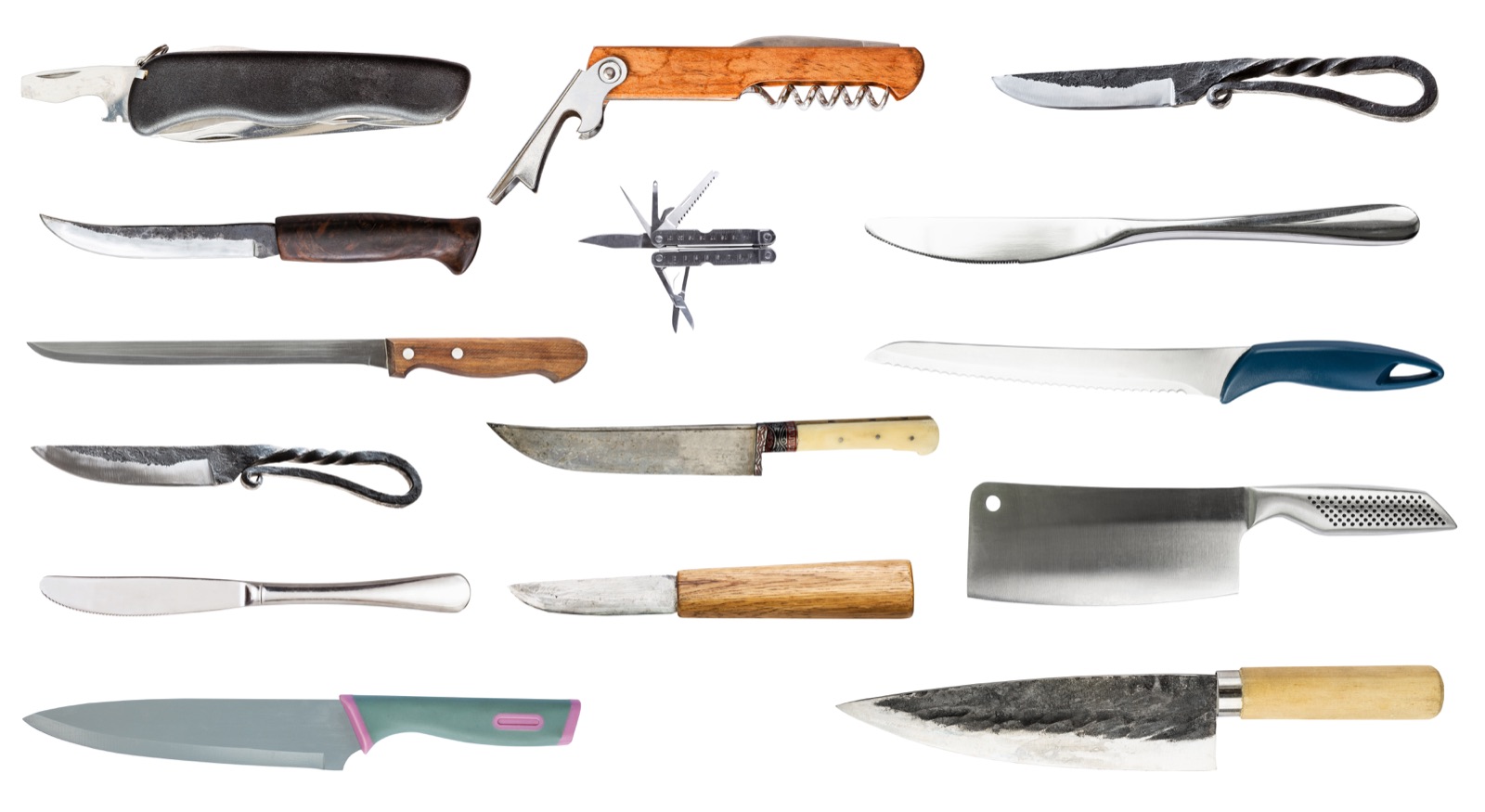
Do not approve ‘knives’ as one product category.
A kitchen knife, folding pocket knife, craft cutter, machete and automatic-opening knife may follow very different legal pathways. Before stock is ordered, imported or listed, the business needs to classify the exact product and check every place where it will be delivered or collected.
Finding a gap after launch can mean border detention or seizure, an unlawful sale to a minor, penalties, urgent stock removal, disabled marketplace listings or stock that cannot be sold through the intended channel.
This guide focuses on importing and selling knives. Separate possession, carrying, use, transport and approval conditions may also apply.
Confirm the design, import route, buyer-age rule, signage, display and storage requirements, online controls and evidence for every intended market.
Why one rulebook fails
The product name is only the beginning of the assessment.
Australia has Commonwealth import controls and separate State and Territory sales, weapons and retail-display rules. New Zealand has its own offensive-weapon import categories and domestic consumer and possession laws.
The answer can turn on details such as whether the blade opens automatically, locks after opening, is double-edged, is designed for throwing or concealment, is incorporated into another object, or is marketed for combat or violence. A limited exemption for an ordinary eating or cutlery knife in one jurisdiction should not be assumed to apply elsewhere.
Four gates should be cleared before sale
- Exact product classification: assess the blade, opening mechanism, handle, sheath, intended use, packaging and marketing of each SKU.
- Import permission: check whether the item is prohibited, conditionally importable or requires consent before it reaches the border.
- Destination rules: map the buyer-age, evidence, signage, display, storage and prohibited-weapon controls for every delivery and collection location.
- Operational controls: make sure purchasing, stores, ecommerce, marketplaces, fulfilment providers and customer service all apply the same approved position.
Australia at a glance
The age rule and retail controls are not uniform.
This snapshot is a starting point, not a substitute for classifying the exact product. Prohibited-weapon rules, exemptions and approval conditions can create additional controls.
| Jurisdiction | Buyer-age position | Sign or online notice | Secure display | Key point |
|---|---|---|---|---|
| New South WalesCurrent law | Do not sell a knife to a child under 16. A sale to a 16- or 17-year-old requires a reasonable excuse, such as a genuine occupational, educational or training need. | No general knife-sale sign identified. | No general retail lock-up rule identified for ordinary knives. | The seller’s reasonable age belief and the employer’s due-diligence controls matter. |
| VictoriaCurrent law | Do not sell a prohibited weapon to a person under 18. Do not sell a controlled weapon to a person you know is under 18. | No general knife-sale sign identified. | Check any exemption, approval or classification-specific conditions. Secure storage is also recommended by Victoria Police. | Most knives are controlled weapons, while particular designs are prohibited. Machetes are prohibited weapons unless an exemption or approval applies. |
| QueenslandCurrent law | Controlled items must not be sold to minors. | Prescribed signs are required at each display area or point of sale in a retail outlet. | Specified higher-risk items must be secured when they are not in a person’s physical possession. | Commercial sellers also need employee instructions and acknowledgements, age-evidence controls and marketing that does not promote violence or criminal use. |
| Western AustraliaCurrent law | Do not sell an edged weapon to a child under 18. | No general knife-sale sign identified. | No general retail lock-up rule identified for ordinary knives. | The definition extends beyond ordinary knives to machetes, sickles, scythes, axes and other specified sharpened articles, subject to limited exclusions. |
| South AustraliaCurrent law | Knife sales to minors are prohibited, subject to limited exclusions. | Prescribed prohibition information is required, including for relevant direct sales delivered to or collected from a South Australian address. | Prescribed sharp or pointed knives must be secured in publicly accessible retail areas, subject to applicable exclusions and transitional arrangements. | The notice, online-information and storage requirements commenced on 1 July 2026. |
| Australian Capital TerritoryCurrent law | Do not sell a knife to a person under 16. | Retail sellers must display the prescribed sign, with a modified display option where knife sales are not a major part of the business. | No general retail lock-up rule identified for ordinary knives. | The exact sign route depends on how significant knife sales are to the retail business. |
| TasmaniaProposal only | An under-18 sales prohibition was included in a 2026 consultation draft. | Mandatory signage was proposed. | Secure storage was proposed. | A machete prohibition was also proposed. As at 1 September 2026, these were proposals for Parliament to consider, not operative retail rules. |
| Northern TerritoryCurrent law | As at 1 September 2026, the current sources reviewed did not identify a general age-based sales ban for ordinary knives. | No general knife-sale sign identified. | Approval conditions and classification-specific requirements can apply to prohibited weapons. | Ordinary knives are controlled weapons and specified higher-risk designs are prohibited weapons. Prohibited-weapon approvals and sale-record requirements can apply. |
‘No general requirement identified’ means no universal requirement was identified in the current primary sources reviewed. The exact design, classification, exemption, approval or business activity can change the result.
Commonwealth import and product-safety checks still apply
Commonwealth law restricts the importation of specified designs unless the applicable statutory test is satisfied. The restricted categories include automatic-opening, butterfly, concealed, push, trench, ballistic and throwing knives, as well as other listed weapons and parts. The exact Schedule 13 description and the tests available for that item govern the result.
A separate permanent product-safety ban applies to children’s art, craft and stationery sets that include a metal-blade knife or cutter unless the outside packaging carries the required prominent and legible declaration in letters at least 3 mm high. A product can therefore pass a State retail-age check and still fail an import or product-safety gate.
Online sales are not exempt
Build the checkout around the delivery and collection location.
Queensland’s definition of ‘sell’ extends to a sale made outside Queensland to a person in Queensland. South Australia requires prescribed information to be published on the transaction website, or otherwise provided to the customer, for relevant direct sales delivered to or collected from a South Australian address.
A defensible online process should identify the destination before completion, block prohibited routes, collect acceptable age evidence where required and use an attended, age-verified handover where that is needed to make the control work. Marketplace, courier and fulfilment settings should match the retailer’s approved rule matrix rather than relying on a general ‘18+’ label.
Common traps
Four shortcuts that can produce the wrong answer
- Relying on a supplier description or marketplace category as the legal classification.
- Applying one national ‘18+’ rule without checking each destination.
- Checking the warehouse location instead of the customer’s delivery or collection location.
- Assuming an import consent or permission also authorises the product’s local sale.
New Zealand
Start with the offensive-weapon import categories.
The Customs Import Prohibition (Offensive Weapons) Order 2021 restricts specified designs, including knuckleduster knives, disguised weapons, automatic-opening knives, gravity or butterfly knives, certain concealment, stabbing, throwing and push-knife designs, and bayonets. Importation requires the Commissioner of Police’s consent and compliance with its terms.
The Firearms Safety Authority says consent must be obtained before the item arrives and applications can take five to six weeks. As at 1 September 2026, the current primary sources reviewed did not identify a general New Zealand statutory minimum age, prescribed knife-sale sign or universal locked-display rule for ordinary knives. A voluntary ‘18+’ or secure-display policy may still be a sensible risk control, but it should be described as company policy unless a specific legal or consent condition makes it mandatory.
Most of the Arms Act 2026 and the new firearms regulations come into force on 23 September 2026. Businesses dealing with items that could fall within the arms or restricted-weapon regime should recheck the commencement, regulations and transition position before importing or supplying them.
What businesses should do now
Turn the legal map into controls that stop the wrong sale.
- Build an SKU classification register. Record photographs, blade and opening features, intended use, packaging, marketing and the reason for each classification.
- Create a destination matrix. Cover import status, age limits, acceptable evidence, signs, storage, marketing restrictions and delivery or collection controls.
- Block purchasing and listing until the route is cleared. Do not rely on a supplier description or marketplace category as the legal classification.
- Configure the live systems. Apply the approved position to POS, ecommerce, marketplaces, warehouse rules and delivery instructions.
- Train staff and keep proof. Retain employee instructions, acknowledgements, sign versions, age-check records, approvals and review dates.
- Trigger a recheck when something changes. Review again if the design, supplier, packaging, claims, sales channel, destination or law changes.
Official sources
Check the controlling material for the exact product and location.
- Commonwealth Customs (Prohibited Imports) Regulations 1956
- ACCC Product Safety: undeclared knives or cutters in children’s sets
- New South Wales Summary Offences Act 1988
- New South Wales Summary Offences Regulation 2025
- Victoria Control of Weapons Act 1990
- Victoria Police: knife storage and sales
- Queensland Summary Offences Act 2005
- Queensland Summary Offences Regulation 2016
- Western Australia Weapons Act 1999
- Western Australia Weapons Regulations 1999
- South Australian Attorney-General’s Department: knife crime laws
- South Australia Summary Offences Regulations 2016
- Australian Capital Territory Crimes Act 1900
- Australian Capital Territory Crimes Regulation 2001
- Tasmania Police: 2026 consultation on proposed knife reforms
- Northern Territory Weapons Control Act 2001
- Northern Territory Weapons Control Regulations 2001
- New Zealand Customs Import Prohibition (Offensive Weapons) Order 2021
- New Zealand Firearms Safety Authority: consent to import offensive weapons
- New Zealand Arms Act 2026
Important information
Check the exact product and current law before acting.
This update is general information, not legal advice. Knife classifications, exemptions, approvals and sale conditions are fact-specific, and laws and official guidance can change. The position stated is current to 1 September 2026 based on the primary sources reviewed. The New Zealand position must be rechecked from 23 September 2026 when most of the Arms Act 2026 and the new firearms regulations commence.