
Product safety · Online marketplaces
When your website is both retailer and marketplace: who controls product safety?
A third-party listing can become a product-safety problem for the whole sales channel. The ACCC is calling for new marketplace duties, but existing product-safety laws already apply now.
The practical lesson
Do not wait for a safety incident to work out who controls the listing.
If a website sells its own stock and also allows third-party sellers to reach customers, product safety cannot be treated as a set of disconnected responsibilities.
The business should be able to identify who approves each seller, screens the product, checks mandatory standards and warnings, receives incident reports, removes unsafe listings, prevents relisting, identifies affected customers and coordinates any recall.
Unclear ownership can leave an unsafe product available for longer, delay a recall, weaken the evidence trail and expose more than one participant in the sales and fulfilment chain.
If a product-safety problem is reported today, can your business stop every affected listing and shipment, identify the customers and preserve the evidence without first debating who is responsible?
Why this matters now
The ACCC says the current framework has gaps for online marketplaces.
On 1 September 2026, the ACCC responded to a designated complaint by CHOICE concerning unsafe products sold through online marketplaces. The ACCC agreed that the Australian Consumer Law has limitations where sellers are based overseas or the marketplace is not the direct supplier.
The Australian Government has announced that Treasury will lead work to strengthen the product-safety framework. The areas identified include:
- mandatory product-safety obligations for online marketplaces;
- stronger mandatory injury-reporting requirements;
- stronger penalties; and
- possible general safety protections applying across consumer goods.
These are announced reform areas, not enacted law. As at 2 September 2026, the ACCC announcement did not identify an exposure draft, bill, commencement date or consultation deadline.
Existing obligations
Reform is proposed, but product-safety law is not on hold.
Businesses supplying consumer products must continue to comply with the current Australian Consumer Law. Depending on the product, activity and legal role, that can include:
- mandatory safety and information standards;
- interim and permanent product bans;
- supplier, importer and manufacturer obligations;
- rules applying to possession or control of goods that cannot lawfully be supplied;
- mandatory reporting of a product-related death, serious injury or serious illness;
- recall notification and corrective action; and
- consumer guarantees and product-liability provisions.
The correct legal position depends on the exact product and what each entity actually does. A platform label such as ‘marketplace’, ‘retailer’, ‘seller’ or ‘fulfilment provider’ does not replace that analysis.
A current enforcement example
A marketplace can face scrutiny when it has possession or control of goods.
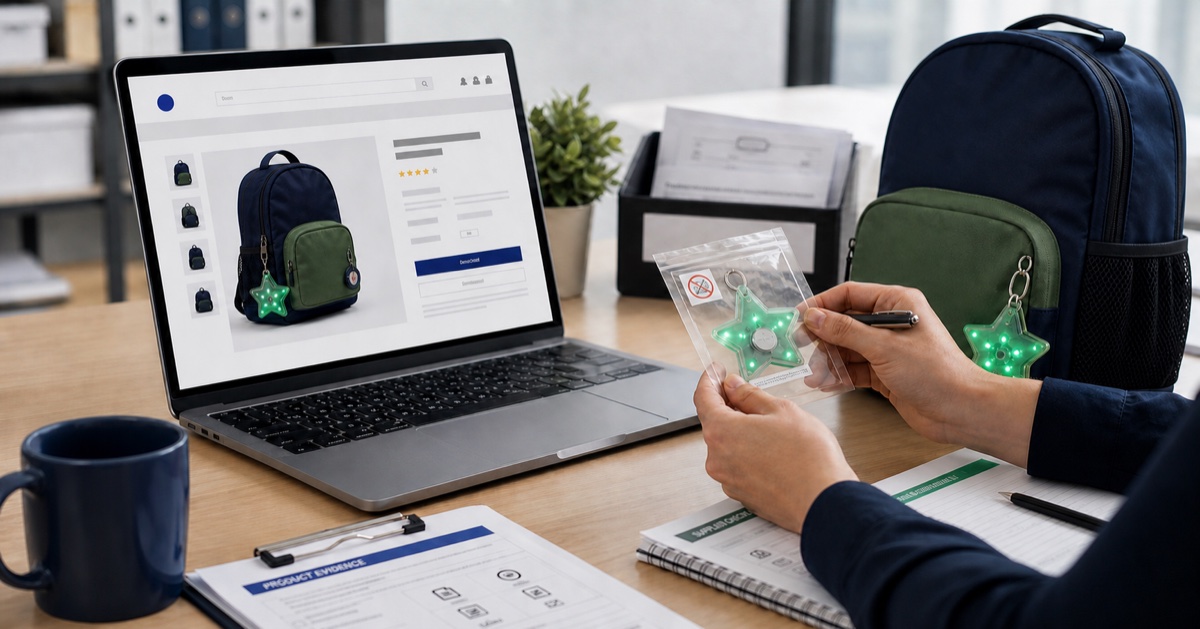
In May 2026, the ACCC commenced Federal Court proceedings against Amazon Commercial Services Pty Ltd. The ACCC alleges that children’s backpacks offered on Amazon’s marketplace failed to carry mandatory button-battery warnings.
The backpacks included a detachable light-up unicorn toy containing button batteries. The ACCC alleges that 41 backpacks were purchased by Australian consumers and 267 were held in Australian fulfilment centres. Its case is that Amazon had possession or control of the products through its fulfilment service, which included receiving, storing, picking, packing and shipping products for third-party sellers and handling customer service and returns.
The ACCC describes the proceedings as its first Federal Court case against an online marketplace alleging non-compliance with mandatory product-safety standards. The Court has not determined the allegations.
A product may be listed by a third party, stored by another entity, dispatched through a fulfilment network and supported by a platform. The legal and practical response still has to work across the complete chain.
One website, different selling roles
Direct retail and third-party marketplace sales need connected controls.
A retailer may sell its own inventory, host third-party listings, import selected products, provide storage or fulfilment, take payments, manage customer service and control returns. Different entities may perform different functions for the same customer transaction.
The risk is not solved by allocating responsibility in a contract if the live systems do something else. The listing workflow, product evidence, customer records, incident process, warehouse controls and takedown tools must match the intended allocation.
Controls to put in place
Build one product-safety pathway across every seller and channel.
- Seller approval: verify identity, location, product categories, contact details and the party responsible for regulatory responses.
- Product screening: identify banned products, mandatory-standard categories, recall matches and high-risk features before a listing goes live.
- Evidence requirements: define the test reports, certificates, warnings, traceability records, images and supplier declarations required for each category.
- Listing controls: prevent required warnings or safety information from being omitted, cropped or contradicted by marketing claims.
- Incident reporting: route complaints, injuries, near misses, returns and regulator contacts to a product-safety owner quickly.
- Takedown and relisting controls: remove affected listings and variants across every seller account and stop the same or similar product returning under a new identifier.
- Traceability and recalls: preserve seller, product, order, customer, warehouse and delivery records so affected products and customers can be found.
- Contract and operational alignment: test whether each party can actually perform the duties allocated to it.
Preparing for reform
Map the current system before new duties are drafted.
Businesses do not yet know the final scope of any new marketplace obligations. They can still prepare by mapping every online sales channel, seller and fulfilment model; identifying who performs each safety function; documenting the evidence and systems used; and recording gaps that prevent a fast, complete response.
That work supports compliance with existing obligations and makes it easier to assess future due-diligence, reporting, takedown or recall requirements once draft legislation is released.
Practical support
Test the complete product-safety pathway, not only the contract.
Watchdog can review the retailer, marketplace, seller and fulfilment model; map current legal responsibilities; test product screening, evidence, incident, takedown and recall controls; and identify the changes that should be made now.
Tell us how products reach your customers and where third-party sellers, fulfilment providers or online marketplaces sit in the process.
Official sources
Primary material used for this update.
Important information
Distinguish current law from proposed reform.
This update is general information, not legal advice. The marketplace reform areas discussed above have been announced but are not enacted law. Existing obligations depend on the exact product, transaction, legal entity and operational role. The position stated was checked against the primary sources available on 2 September 2026. Obtain advice for your circumstances before acting.