
Australia and New Zealand · Marketing and promotions
When positive ‘customer’ reviews become misleading
In August 2026, The TV Shop was fined NZ$1.104 million for a range of Fair Trading Act offending that included systematic review manipulation. The case follows earlier Australian cases over several years, including penalties of A$3 million for Meriton, A$2.9 million for HealthEngine - which also covered separate patient-information conduct - and A$600,000 for Service Seeking.
Why this matters
The fines can be in the millions
- A$3 million - Meriton: Federal Court penalty for manipulating TripAdvisor’s review process.
- A$2.9 million - HealthEngine: Federal Court penalties for misleading patient reviews and ratings and separate conduct involving patient information.
- NZ$1.104 million - The TV Shop: District Court penalty for a range of Fair Trading Act offending, including deliberate and systematic review manipulation.
- A$600,000 - Service Seeking: Federal Court penalties for false or misleading representations created by its business-authored review process.
- A$138,600 - Hismile: payment under seven ACCC infringement notices, with separate admissions in a court-enforceable undertaking.
- A$39,600 - PhotobookShop: payment under two ACCC infringement notices for alleged misleading influencer-review conduct.
- A$6,600 - Citymove: infringement-notice payment after admitting it published altered testimonials copied from another website.
Note: These outcomes are not directly comparable; some covered other conduct, and infringement-notice payments are not court findings.
Some cases
What happened in each case
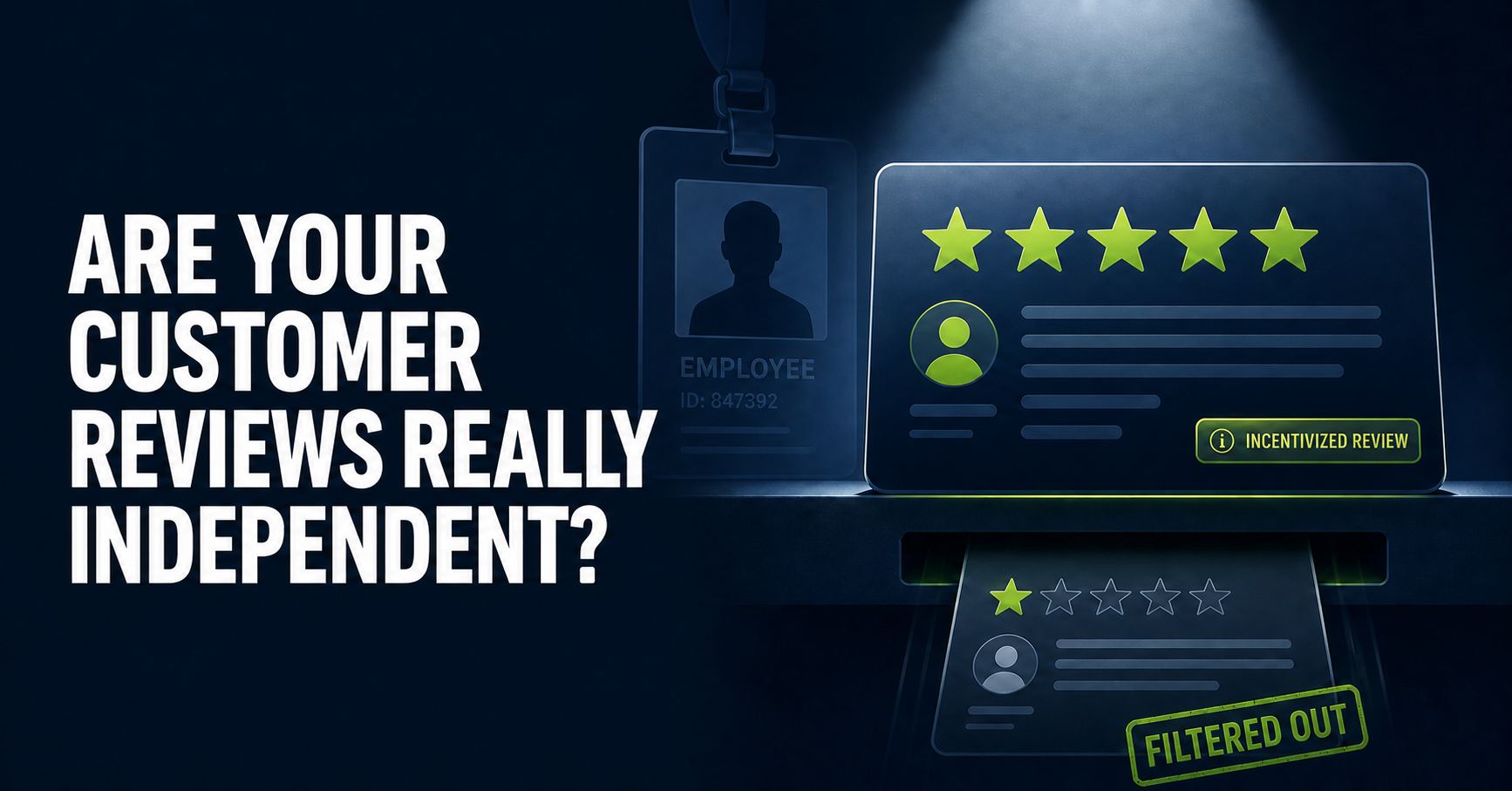
- The TV Shop, New Zealand: the NZ$1.104 million District Court penalty covered a range of Fair Trading Act offending. The review conduct included undisclosed staff reviews, reviews by some employees who had not used the product, requests for friends and family to leave reviews, and systematic filtering of low-rating reviews.
- Hismile, Australia: the ACCC action concerned social videos that presented employees as apparently random shoppers, as well as separate Glostik Tooth Gloss efficacy representations. Hismile paid $138,600 under seven infringement notices in total and, in a court-enforceable undertaking, admitted that relevant conduct contravened or was likely to contravene the Australian Consumer Law.
- PhotobookShop, Australia: the ACCC issued two infringement notices over alleged conduct involving an undisclosed commissioned influencer review and a substantive edit that removed negative comments. PhotobookShop paid $39,600; payment of an infringement-notice penalty is not an admission of contravention.
- HealthEngine, Australia: the Federal Court ordered HealthEngine to pay A$2.9 million for misleading patient reviews and ratings and separate patient-information conduct. HealthEngine admitted that it did not publish around 17,000 reviews and edited around 3,000 reviews to remove negative aspects or embellish them.
- Service Seeking, Australia: the Federal Court ordered Service Seeking to pay A$600,000. Businesses could draft their own reviews and choose their own star rating; if the customer did not respond within three days, the review could be published automatically without customer input.
- Meriton, Australia: the Federal Court ordered Meriton to pay A$3 million after it manipulated TripAdvisor’s review process by preventing selected guests, who were suspected of being likely to provide negative reviews, from receiving review prompts.
- Citymove, Australia: Citymove admitted publishing altered testimonials copied from an unrelated review website and paid a $6,600 infringement-notice penalty.
What this means
The system around a review can be as important as its words.
A review does not need to be wholly invented to mislead. The overall impression may be false where a genuine employee is presented as an independent shopper, a commercial relationship is hidden, important criticism is removed or a business publishes wording the customer did not actively adopt.
The same principles apply across a business’s website, social media, influencer campaigns and third-party review platforms. Selection and moderation practices can distort the picture even when every published sentence came from a real customer.
Review governance therefore needs to cover the complete lifecycle: invitations, eligibility, incentives, disclosures, scripts and briefs, editing, customer approval, moderation, publication and periodic monitoring.
What to do
Turn this update into action your business can take to reduce risk
Use an end-to-end review governance process: control how reviewers are invited, verify genuine experience, identify and disclose material relationships or incentives, preserve the reviewer’s genuine overall message, apply neutral moderation rules, monitor the published results for distortion and retain evidence of each step.
- Separate employees, affiliates, family, friends, influencers and other incentivised reviewers from independent customers. If they speak about a product, require a clear and prominent disclosure of the relationship.
- Confirm that each person actually used or experienced the product or service represented. Do not let silence, a failure to respond or an internal approval step convert business-authored wording into a customer review.
- Preserve the reviewer’s genuine overall message. Do not script, rewrite, splice or substantively edit content so it becomes more favourable, and obtain approval for any necessary production edits.
- Use content-neutral invitations and a documented moderation policy. Do not target likely positive reviewers or gate, delay, demote or suppress genuine criticism in a way that distorts the displayed picture.
- If an incentive is offered, make it available regardless of whether the review is positive or negative and disclose it prominently with the review.
- Keep campaign briefs, relationship and incentive records, proof of experience, original and final content, reviewer approvals, moderation decisions and periodic checks of ratings and removal patterns.
Official sources
Review the media releases
- New Zealand Commerce Commission: The TV Shop to pay $1.104m
- ACCC: Hismile pays penalties for false and misleading social media videos
- ACCC: Hismile section 87B undertaking
- ACCC: PhotobookShop pays penalties for influencer reviews
- ACCC: Online reviews and testimonials report
- ACCC: HealthEngine to pay $2.9 million for misleading reviews and patient referrals
- ACCC: Service Seeking to pay $600,000 for misleading online customer reviews
- ACCC: Meriton to pay $3 million for manipulating TripAdvisor reviews
- New Zealand Commerce Commission online reviews guidance
- ACCC online reviews guidance
Practical support
Apply this update to your business.
Confirm the products, customer journeys, claims, suppliers or processes affected, then identify the evidence, ownership and timing needed for a defensible response.
Watchdog can assess the update against your circumstances and recommend the most useful next step.
Important information
Check the current position.
This update is general information, not legal advice. Laws, official guidance and proceedings can change. Check the current source and your specific facts before acting.